
I would never have thought that I would be sitting here reflecting on the five-year anniversary of our company and architectural firm. At first, success seemed guaranteed, starting from the very first day of university back in 2013. ‘Your ideas are going to change the world,’ our course director told us in that lecture theatre that day, and I was actually young and dumb enough to believe him. Little did he know, and little did I know, the tumultuous journey that lay ahead, and that our designs and professional advice would, in fact, one day make substantial contributions to the way communities, families and individuals live their daily lives.
I love being an architect and operating my own business, but it did take over seven years from the first day of undergrad to the day of my registration. One of the main reasons I wanted to be an architect as a child was because of how straightforward it was to explain to someone what I did. I wasn’t some incomprehensible ‘Senior Executive Vice President for the Cross-Functional Integration of Emerging Paradigms in Holistic Stakeholder Engagement’ – a real position by the way. I was simply an ‘architect’.
It took another three years to get the business rolling; architectural project cycles are very long. It also comes with the loss of many friends and colleagues along the way to adjacent professions; not everyone sticks it out through the difficulty of university, the workplace conditions and the highly stressful exams. Architecture truly exemplifies conviction and persistence. Sometimes it feels like everything and everyone is against you, and other times it’s all going so well.
Right now, some are even saying that being an architect isn’t worth it*, that it’s too difficult for graduates to get meaningful jobs, and that design is only reserved for the wealthiest. Some have been pointing out for decades how disconnected architecture school’s ivory tower is from the real world. For those thinking of becoming an architect, this raises some very important questions:
• Do I have the gumption and character to battle it out with much more powerful individuals for almost a decade to become an architect?
• Does the five-year, $50,000 university degree give me the skills I need to be effective? (Remember, architects are held to a very high standard by the law!)
• Do my future employers care to teach me the plethora of skills needed to do my duties to the community well?
Either way, those looking to pursue this career need to understand what it really looks like. The person who wants to be an Olympian can’t only look at the champion standing on the podium at the medal ceremony, but has to look at the day-in, day-out grind of practice, constant injuries, and the boring repetitive routines of training, all with the constant apprehension of not knowing if they will win the ultimate prize.
I remember at university constantly being told I was wrong. That my subjective ideas were silly and that I didn’t understand what architecture was really about. And the older I got, the more this idea was reinforced. The workplaces were much the same; like an authoritarian regime, we underlings all had to align our brains behind a single individual’s shadow, an individual who was so faultless and god-like that they transcended the very concept of human error. It seemed that one had to obtain some sort of licence in order for their subjective ideas to be ‘right’ or even heard in discussion. Was I, or any human for that matter, even capable of becoming ‘faultless’ myself one day?
No. The answer is no.
One would think that the objective part of architecture — the bricks and mortar, the approvals from council, the management of clients spending big dollars, projects finishing on time (I could go on) — would be where one could make the bold claim that they were “right”. A wall is a wall; a deadline is a deadline. If you don’t manage the client’s expectations, you’ll find yourself in a courtroom. It’s concrete, pun intended. It’s either done right or it’s done wrong.
But this isn’t enough either.
What we didn’t learn at university was then taken hostage and used to extort us young graduates when we entered the workforce. It made us put up with long hours, low pay — the lowest allowable by law — and a work environment where some had this exclusive licence to be right and others were just always wrong. Because we yearned to learn, that very ambition was used against us. I only just found out that one of the most influential architects we studied in order to emulate, and who kept designing buildings that leaked like a spaghetti strainer, was a known fascist.** It actually seems so obvious in hindsight.
Now, you may be thinking that I’m very naïve, but remember, on the first day of university we were told our ideas would change the world, as if we had made it just by getting accepted into the degree. In hindsight, what they really should have told us was:
‘You are now the smallest of the small, the lowest of the low. The course directors will grind you down completely, and then some, so that they can show off the diabolically amazing work you produce and claim it as their own accomplishment. And then, once you’re done with that, the biggest architectural firms will hire you and also use you as cannon fodder, just in the same way you have been training to be cannon fodder during the past five years.’
And I think it’s a fitting number. Five years of study to get a master’s. Five years of working and studying for exams to get registered and, now, five years of running my own firm.
And it’s definitely not all gloom.
The saving grace of the architectural profession is that if you can get through all the sludge, all the gaslighting and long hours and living off peanuts and being treated like an executive assistant at the age of 25, you get to do something that no one else can do: become a registered architect and work on your own projects.
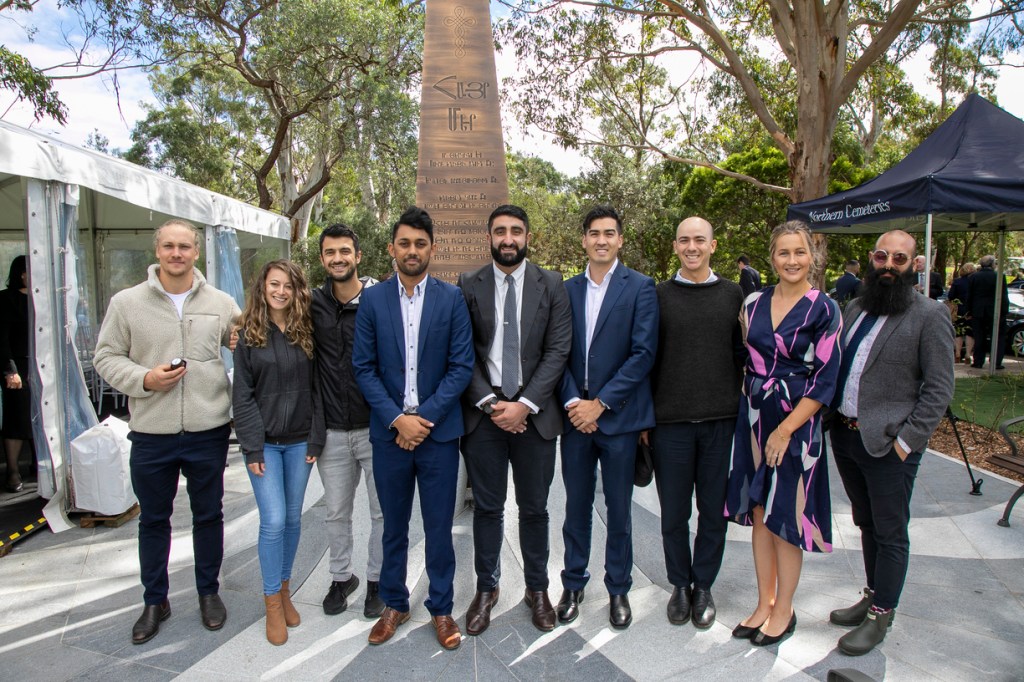
Since registering, we have designed and built homes for families and watched them live their new lives. We have taken clients through the tumultuous courts and councils to get them their permits. We have guided young couples through the gauntlet of strata so that they know their rights and are able to create the homes they want and deserve. We have managed huge, large-scale projects, and really small ones too. We have designed and built monuments to history and we have also made art. We have travelled throughout Australia and the world.
We can do all these things because architecture is an incredibly broad subject, and all the bureaucracy in the world, and the scariest, strongest forces of the establishment can’t diminish what architecture truly is at its core: it’s what you decide it is, and there is no exclusive, unobtainable, invisible licence for subjective authority if you don’t believe that there is.
But the only way to get there is to start your own business, and that’s a whole other kettle of fish.
By Andre Vartan-Boghossian
Director & Architect at SDCW
*https://www.dezeen.com/2025/08/15/architecture-graduate-job-market-comments/



 SDCW Architects
Leave a comment